Pages

Tuesday, 1 March 2016

IVF Centre in Bathinda


Generally, one would hear about them from friends or relatives and others would get suggestion from their gynecologists. You might even read an advertisement and say if it is possible what the harm. If In Vitro Fertilization is the option for you then you consider some facts on choosing the right center. 

For any successful IVF center the success ratio of how many women actually take a healthy baby home is vital. Next comes, how many cycles does the center perform per annum. The quality of the donor eggs and sperm and, most important are you fit for and IVF, which your doctor can examine and let you know. 

Another vital factor that comes in choosing the right IVF center is the communication you get from the doctors, experts and staff at the IVF clinic. As is you will be coming here on a regular term for a while and being comfortable in expressing yourself is vital. Also choosing a clinic that accepts your insurance company is important.

Infertility is perhaps the most serious issue a couple can face. It not only takes you on an emotional, stressful and physical trip but, expensive as well. But, now with the boom in the success rate of IVF centers packages are being offered at affordable prices and you can get at par treatments like IVF, IUI, ICSI, Laser Assisted Hatching, Blastocyst Transfer, Sperm & embryo freezing, Donor Egg IVF and Embryo adoption all under one IVF center. 


Saturday, 20 February 2016

Aluminum Increases the Male fertility Problems


In 2003, the Institute de Veille Sanitaire (InVS) already stated that “aluminum can be toxic to plants, animals and man.”
Gold, aluminum ends up on our plates as a food additive. It is used to improve retention, texture, but also the color of the products. To avoid exposure to this metal, limit the consumption of dishes made with industrial additives “E173”.
It is also recommended to avoid paper containers and aluminum for cooking or drinking. Also, read the labels before you buy cosmetics because many of them contain aluminum in their composition.
Soap, toys and toothpaste, causes of male infertility? Not so simple
This is the first time we directly show the effect of several chemical pollutants in household products, on the in vitro mouse sperm, and their mechanism of action.
Although this effect alters two of their essential properties (mobility and activation), both dependent calcium entry into the cell, it does not however prove that exposure in humans inevitably lead to a male sub fertility. 

To better understand the issues of this study, it must be placed in context.

 A decrease in sperm count


Overall, one in seven couples consults because it cannot have children after a year. It’s a lot. In 50% of cases it is a male problem, and for the other half of a female problem, the combination of the two being frequent, close to 60% of cases.

Furthermore, more and more children are born by medically assisted procreation, or 2%.

This allows us to establish that there is an increase in male infertility? It is a debated issue since 1992, or 22 years, when the first serious studies have reported a decline in semen analysis parameters, without one is able to answer clearly.

This has however since been confirmed by many studies showing a decrease in sperm count, mobility and morphology among fertile sperm donors.
 

Tuesday, 9 February 2016

Male Ivf Infertility


Aluminum reduces sperm quality and sperm count, according to results of a new scientific study published in the medical journal Reproductive Toxicology. The increased exposure of humans to environmental pollutants, including aluminum, could be responsible for the deterioration of sperm quality observed over the past decades in industrialized countries.

Researchers from the University Hospital of Saint-Etienne, Lyon and the University of Keele (UK) measured the aluminum concentration in the sperm of 62 patients and conducted a preliminary assessment of its impact on quality sperm.

The average aluminum concentration in the semen of 62 controls was quite high. Researchers measured an average of 339 ppb (parts per billion).

The results of the study show that patients with oligospermia (a concentration of abnormally low sperm) had a higher aluminum concentration than that of others.

“There has been a significant decline in male fertility, reduced sperm count among men in industrialized countries in recent decades. Often associated with exposure to endocrine disruptors, it can also be related to the high exposure aluminum "recalls Professor Exley, professor of biochemistry and expert on human exposure to aluminum. "Indeed, human exposure to aluminum has increased dramatically over the same period. And the results of our study seems to show that a high aluminum concentration in human sperm reduces fertility”.Avoid exposure to aluminum.

Thursday, 4 February 2016

IVF treatment


IVF treatment has become a tempting technique for the fertilization of female eggs apart from her body. It may include fertilization of own eggs using own sperms or donated eggs as well as sperms.

How to determine the suitability of IVF for you?

IVF may be recommended in case of-

  1.     Unknown infertility
  2.     Blocked or damaged fallopian tubes
  3.    Other methods like fertility medicines and insemination could not produce the results
  4.    Fertility issues in male
  5.   Use of donated or frozen eggs
 IVF treatment procedure

In the present time diverse techniques have been found for the IVF treatment depending on the patient condition and reliability of a clinic. Initially you need to fill up various approval forms and then give blood tests for the HIV, hepatitis B C and HTLV diseases. The different steps included in the treatment are-

  1.   Cease natural monthly hormone cycle in female- A medicine is give to cease the natural hormone cycle that is consumed through nasal spray or injection.
  2.   Egg production- A special fertility hormone named gonadotrophin is given on daily basis for almost less than two weeks to increase the count of eggs produced.
  3. Process evaluation- Your physician will determine the process of medicinal treatment by vaginal ultrasound scans and probably through blood tests. The hormone is injected until one day before the eggs collection to ensure their maturity.
  4.  Egg collection – Eggs are often retrieved by ultrasound instructions that includes insertion of a hollow needle to collect the mature eggs from the female’s ovary.
  5.  Eggs fertilization- The eggs collected from the female’s ovary are mixed with male partner’s sperms and cultured in a lab for 16 to 20 hours subsequent to which they are evaluated for their fertilization. The fertilized eggs develop in the lab incubator within 6 days. They are analyzed again for embryo development and the healthiest one is chosen for the placement in female’s body again.
  6. Embryo Transfer- Depending on the conditions your physician will choose to transfer single embryo for the healthiest results. The count of embryos transferred is limited due to the risk of multiple births. A speculum is inserted into female’s vagina that is comparable to a cervical smear, it is used to keep the vagina open to locate the cervix. Thereafter by using a very fine tube embryos are placed into womb. It is a completely painless process so it doesn’t require anesthesia.
In case of fertility disabilities in male, during IVF treatment in India, male is asked to produce sperms during the time of eggs collection. These sperms are rinsed to prepare them and the active one is separated for mixing with the eggs. In case of stored sperms, it is taken from the storage, melted and made active in the similar manner. 

Providing the highest success rates in becoming pregnant, IVF has become the best treatment to overcome any kinds of fertility issues. Following the above mentioned medications and treatment procedures, many of the couples have enjoyed becoming parent. So now it’s your turn!!

Friday, 29 January 2016

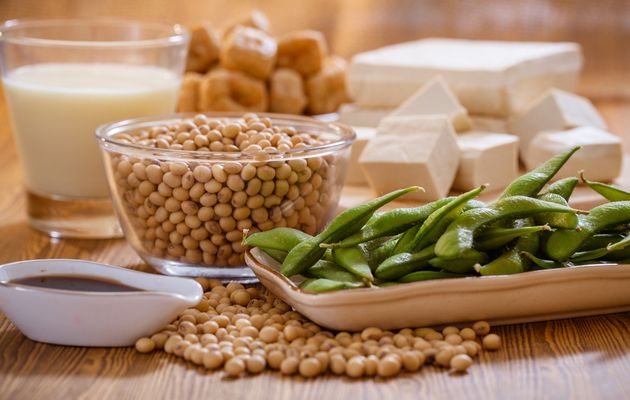
Eating Soy May Increase IVF Success Rate


It has been researched that soy could help the women who are undergoing IVF treatment. It protects the woman from the harmful effects of bisphenol A which is referred to as BPA and have the tendency to interfere with IVF treatment. Bisphenol A is the chemical which is found in many common food containers such as plastic water bottles. US Centers for Disease Control and Prevention estimated that more than 96% of the Americans are found to be having BPA in their bodies.

Estrogen is most important female sex hormone, which can mimicked by this chemical and can lead to various health problems including reproductive problems. A woman with higher exposure to BPA could have infertility problem and cannot achieve pregnancy successfully.

As we know that IVF success rate depends upon various factors. One of the factors is BPA exposure, which play a key role in IVF failure and success rate.  This is always advised that there is need to reduce exposure to BPA who have problem in getting pregnant.

Researchers discovered that woman who ate soy based foods have lower level of BPA in their urine. They took the urine samples of 239 women in which 176 women reporting that they ate soy foods and rest of the 63 women did not eat.

Result of women who did not eat soy based foods, showed the following points:

  • Level of BPA in their urine is higher
  • Lower rate of embryo implantation
  • Fewer pregnancies that resulted in live births

So, it is recommended that women must reduce their exposure to BPA and it helps in improving the fertility and you can get pregnant.